Where To Stay in Bangkok: Discover The Best Areas and Hotels in [year]
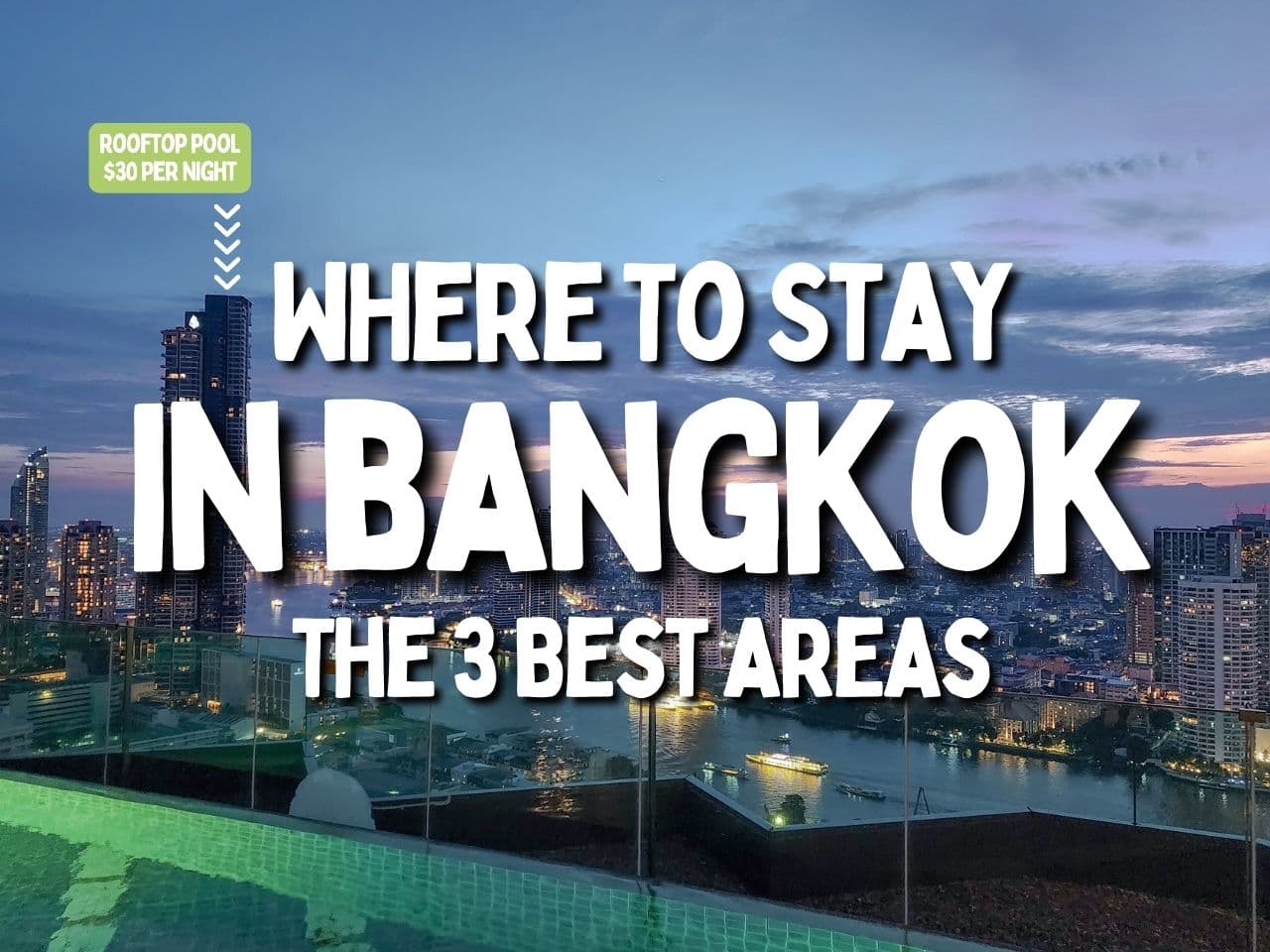
Choosing the best area to stay in Bangkok doesn't have to be complicated.This simple guide will help you find the best place. Luxury $30 rooftop pool hotel here.
See The Full list of all Hotels in Bangkok Here. Over 2,500 Hotels and Hostels >>
This isprobably, one of the most in-depth resources out there, onhow to choose the best place to stay in Bangkok(กรุงเทพมหานคร). After reading this -- you should have a pretty good understanding of how Bangkok is geographically laid-out, with an idea of the best hotels to choose from too. As someone who has lived in Bangkok for almost ten years, I can recommend justthreeneighbourhoods that are perfect for tourists. These are: Bangkok Old Town(Rattanakosin), Sathorn, and Sukhumvit.As a tourist,I wouldn't consider anywhere else.
These neighbourhoods are all centrally located, near the most popular attractions, and have excellent transportation links. Luxurious--Traditional Sathorn, the Cheap--Authentic Old Town, or Modern--Trendy Sukhumvit.
In Bangkok an ideal place to stay would be near a Skytrain or a Metro Station -- this is very important for getting around the city. There is nothing worse than booking a nice hotel only to find yourself stuck in a less-than-convenient location, miles from the city centre. That's why I've written this guide;to help you pick the best area to stay in Bangkok. I'll discuss the pros and cons of each of the three neighbourhoods I mentioned, with the purpose of helping you decide which one is right for you.
Note:This guide is best suited to tourists, backpackers, travellers, and holidaymakers -- who want to figure out where to stay in Bangkok.It might not be suitable for finding long-term accommodation in Bangkok.
Note:Low-cost hotels and rooms are often fine to book on short notice- sometimes even on the same day. But the nicer hotels in Bangkok often get booked up well in advance, especially during the peak season months of NovemberthruMarch.
Hotels in Bangkok often have an odd relationship with these third-party booking websites. More often than not it's cheaper to book on one of these sites than it is to book direct. I often try to book hotels in Bangkok directly, only to have the staff request that I use (usually) booking.com instead.
Where to stay in Bangkok-at a glance. These are the three best areas to choose from --Sathornis the best place to stay in Bangkok, formostpeople -- it's one of the oldest neighbourhoods in the city, where most of Bangkok's well-established hostels are located. TheBangkok Old Town(officially called Rattanakosin) is great for backpackers -- it's the most cultural, traditional, and sociable area. Sukhumvit is more suited to those staying long term -- it's the most modern neighbourhood to stay, in Bangkok. พักที่ไหนดีในกรุงเทพ?
How much does it cost to stay in Bangkok is a difficult question to answer, because -- Hotels in Bangkok can costanywhere from nothing to everything. I've stayed in both Bangkok's Cheapest hostel -- Ploy -- which costs 70 Baht a night, and Bangkok's most expensivehotel-- The Mandarin Oriental -- Which (usually) costs 40-70,000 Baht a night. You can find accommodation foranyprice range in-between -- whatever your budget.
Hotel Prices in Bangkok, (or Thailand for that matter) can, andwillfluctuate massively depending on the season. Prices are lowest in the out-of-season months -- between May to October. The peak season is from November, until April -- which is when prices are much higher -- often double or triple the standard rate -- or more. During Christmas and New Year's, prices can easily be inflated five-fold. Booking in advance can helpto some extentin getting the best deals.
🗺 Note:To make this guide easier to understand, hotel prices are listed in Thai Baht. However, hotels with a nightly cost of 100 USD or more, the prices are listed in USD -- 10 USD = 350 THB.
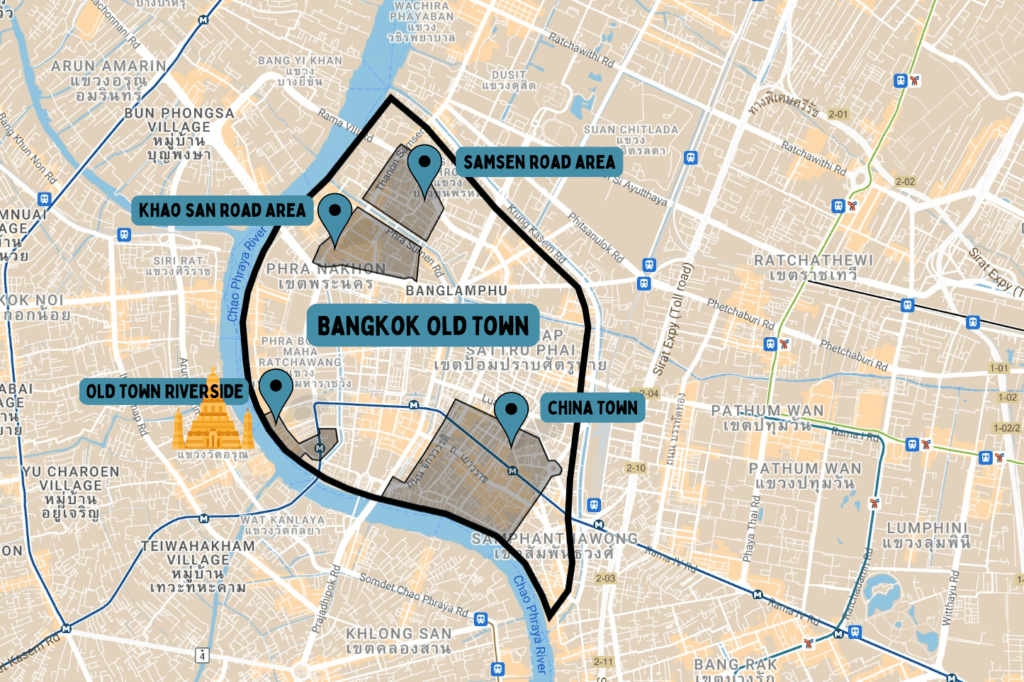
This map of Bangkok shows where to stay in Bangkok. The location of each of the areas I will mention in this guide are outlined on the map. I have also pinned some of the BTS Stations and Landmarks, and marked out the location of each hotel and hostel, which I would recommend in Bangkok.
This area map is interactive, you can scroll around and click on each area for more information. If you want to download a copy of this Google Map for iPhone or Android, you can find it here.
Bangkok can be a difficult city to geographically wrap your head around. Some places have multiple names, they can be referred to by the District Name, the Sub District Name -- or the name of the neighbourhood -- a road -- or even just a nickname. For example, Ban Rak -- which is sometimes called 'riverside' is located inside Sathorn, which in itself, is located inside Silom! Or the Bangkok Old Town, which is just a nickname given to Rattanakosin Island-- which in itself is an area that contains three separate districts and 21 sub-districts. Or Sukhumvit -- which is actually just an unofficial nickname of three neighbouring districts! Confusing, I know -- but I'll try and break down my understanding of the city -- and lay out the geography and areas in such a way that's simple for everyone to understand.
Other Names:Old Town, Banglampu, Rattanakosin Island, Yawrorat, China Town, Khaosan Road, Samsen, Phra Nakon.
Bangkok's Old Town (เกาะรัตนโกสินทร์)is the best area to stay for Backpackers, Solo Travelers, Budget Travelers, Young Travelers and those visiting the city for the first time.But you won't find any fancy hotels here, because, legally -- nowhere in the Old Town can be taller, or as fancy as the Grand Palace.
Good to Know:Bangkok Old Town is sometimes calledBanglampu, orRattanakosin Island. The Old Town is actually a literal 'Island', which is separated from the rest of Bangkok, by the Chao Phraya River and a mix of man-made canals, which together, form a moat circling around the Old Town.The official term is an 'Artificial River Island' -- there are five other river-islands on the Chao Phraya River.
Khao-San Road, Chinatown (Yaowarat) and Samsen are located in the Old Town. You can get to other parts of Bangkok on the Chao Phraya Ferry, and in 2019, three new metro stations opened in the Old Town. Four more 'purple line' stations are currently under construction -- including a MRT Train stationat Khaosan(National Library), expected to open in 2026-27.
When the city of Bangkok was founded in 1782(2325 in Thai Years), by King Rama the First -- the Old Town was the first land to bedeveloped. It's the area where Bangkok's most beautiful temples are located -- including the Grand Palace, the Reclining Buddha, and Wat Arun. Khaosan Road is located here too, which was a former rice and wholesale market -- turned backpacker social hub.
The Bangkok Old Town covers an area of eight square kilometres. This used to be the entire size of Bangkok.
Nowadays, most of modern Bangkok is indistinguishable from other major cities. But, the old town is a different world, that feels like a step back in time. Here, you can wander through narrow streets lined with centuries-old architecture, buildings, homes, temples and palaces; and experience the real Bangkok of centuries past. The Old Town is the most authentic place to stay in Bangkok.
The best areas to stay in Bangkok, within the ancient walls of the Old Town are: theOld Town Riverside Area, theKhaosan Road area, and theSamsen Area. China Town is also located within, the the Old Town, but I don't recommend staying there. It's near enough to visit for a day-trip, in the evening -- or on a street food tour.
Staying riverside in Bangkok's Old Town -- you'll have some of the most epic views of the city. I have two hotel recommendations for the Old Town, Riverside area, and one hostel recommendation -- all of which have views of Wat Arun -- one of Thailand's most famous and beautiful temples. These hotels have the best transport connections in Bangkok's Old Town because Sanam Chai Metro Station is just a few minutes away.
I still remember the first time I visited Bangkok, I'd already been living in southern Thailand for more than two years at this point, so I thought I knew what to expect. But Khao San Road, hits different. It's intense, loud, crazy, even frustrating at times -- but it's a brilliant thing to experience.
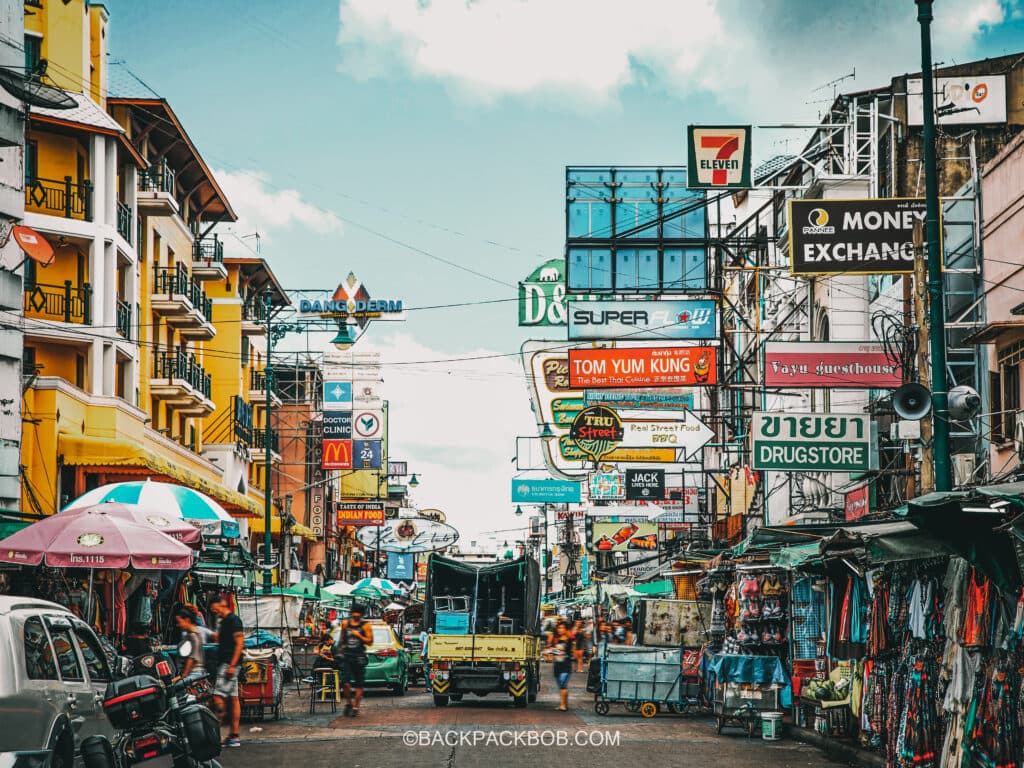
I booked a hostel slap-bang in the middle of Khao San. It was hot and stuffy, it was so loud you couldn't sleep, the beds were rock hard and the rooms were 'clean enough'. But it was one of the best, most care-free, and insane experiences that I'd ever had, and I met some of the most incredible people, who I still consider to be close friends years later.
If you are backpacking in Thailand, travelling solo, if it's your first time in Bangkok, if you want to socialize, or if you want to meet new people, then I strongly encourage you to stay -- as close to Khao San Road as possible.
I know a lot of people will disagree with me. I know there is a lot of hate for Khao San Road and the Old Town area of Bangkok, especially among expats. And I'm in a similar position, after living in the city for the best part of a decade -- for me, it would be absolute hell to stay in this area of Bangkok now. But for your first time in Bangkok -- there is no better experience. Just book one night, to begin with, and try it out. If you like it, extend. If not, move -- simple.
Khao San Road is the centre of Bangkok's fun nightlife -- it's notseedylike Soi Cowboy, Patpong, or Nana. Staying here is a good choice idea if you want to party, and make new friends -- but keep in mind the area can be very loud, with music often played until 3-4 am. The accommodation style is more authentic, and classic. If you want to take on Bangkok properly, these are the best hostels, rooms, and hotels in the Khaosan Road Area.
Back in the day, there were hundreds of hostels on and around Khaosan Road, you could arrive on the bus with a few Baht in your back pocket and find a bed with no troubles. Now -- things have changed. You'll need to book a bed online, and few hostels remain.These, are the best hostels to stay at, in the Khaosan Area of Bangkok:
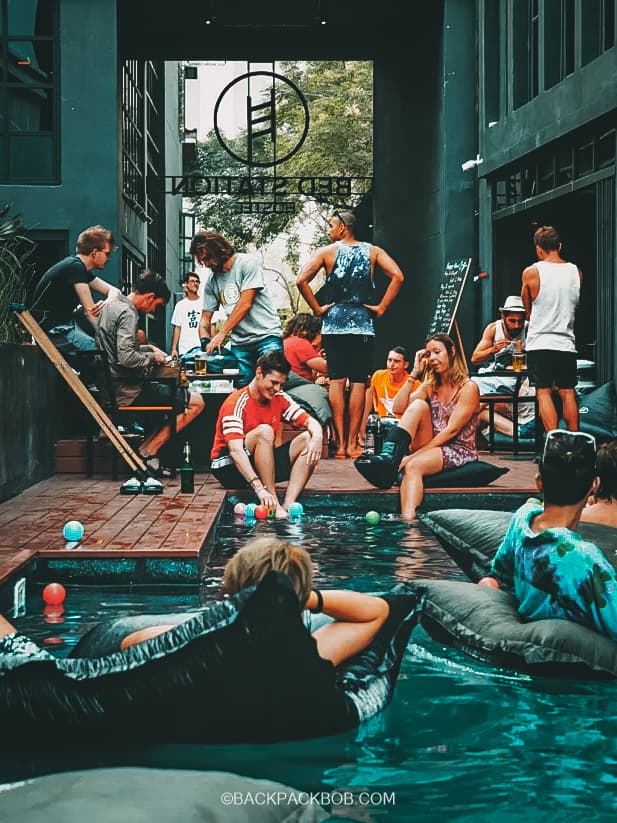
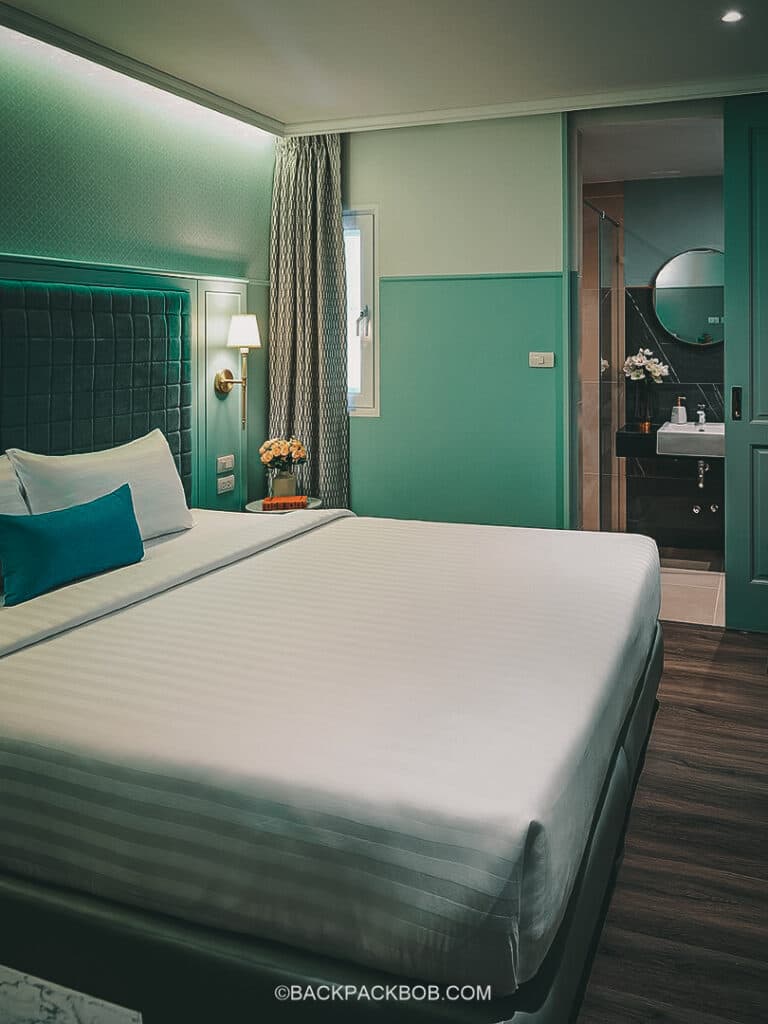
Samsen is one of the fastest-growing social hubs in Bangkok. It's a popular spot for backpackers to stay, and it's where the cheapest hostels in Bangkok are located. It's not as hectic as the Khaosan Road area, but it's within walking distance. The area is far enough from Khaosan that it's quiet enough to sleep in the night. And there is more of a tight-knit, less-bitchy community of backpackers.
There is a canal which separates the Samsen Area and the Khaosan Area. You'll find a hectic vibe on the Khaosan Side, and a more relaxed vibe on the Samsen Side. Use the Nororat Bridge to walk between the two areas. You'll find plenty of Tasty Street-Food along the route.
I lived out of the Samsen Hostels for around two-months during the 2020 pandemic so I know the area well. In fact, I have stayed in every-single one of these hostels and hotels(!) But I do miss the crazy cheap 'covid-price' discounts. At one point we were paying less than 40? Baht a night! Nowadays, you can still find a cheap room, but the prices are closer to 200 Baht a night -- the cheapest hostel in Bangkok is actually located here.
Hostels in the Samsen Road area are not Party Hostels, those are all located at Khao San Road. But there is still a massive social vibe -- just a bit more low-key and respectful. There are no bars, holiday reps, pre-paid wristbands or shot challenges here. It's the type of place you can sit and enjoy a beer without it feeling too rowdy. The best hostels are located from soi two, to soi six.
Other Names:Bangrak, Bangkok Riverside, Silom.
Sathorn is a well-established central area -- a great place for most people to stay in Bangkok. Located riverside on the Chao Phraya, Sathorn is just a few minutes from the Bangkok Old Town by boat.Sathorn also has a wide variety of beautiful hotels and accommodations to choose from, including many that are more upscale. It's close to the action without feeling too overwhelming, making it perfect for couples, families, and anyone who wants to be well-connected.
Charoen Krung Road was the first road in Bangkok, built for diplomats and royals to have a dedicated place to walk -- the road runs between Sathorn and the Bangkok Old Town, starting from the Grand Palace.
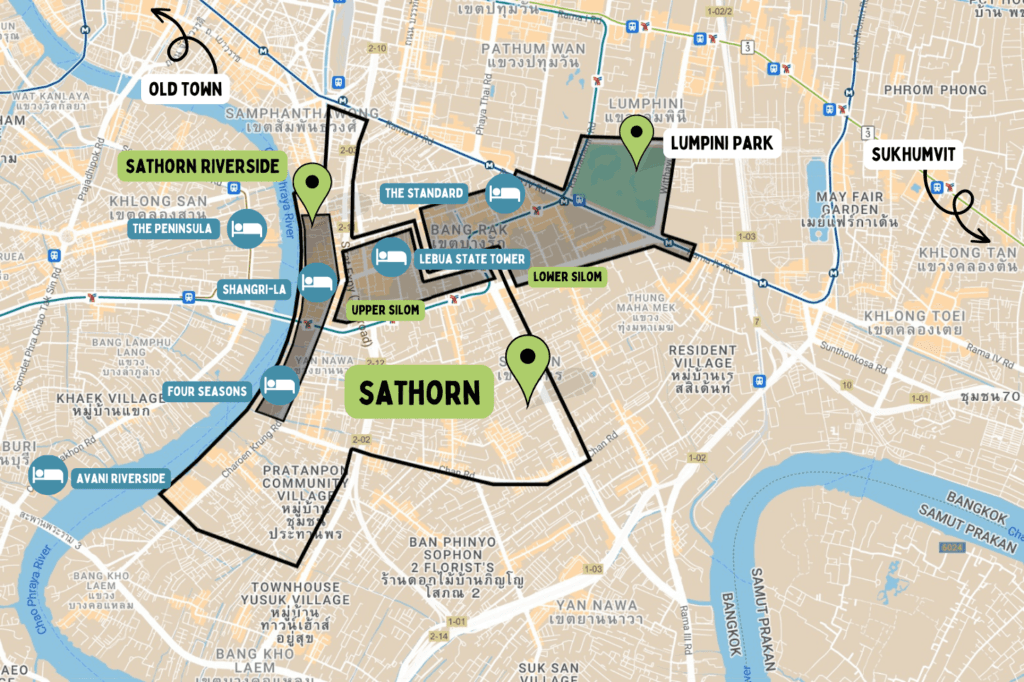
Sathorn is generally the best area to stay in Bangkok, for most tourists-- although it can depend on your budget, because accommodation prices in Sathorn -- especially on the river-front, are a little higher than in the Old Town.
Sathorn is one of the 50 districts in Bangkok. It is located along the riverfront, next to the Bang Rak District. Silom is also in this same area, Silom is a very well-known place -- but also a very small part of Bangkok. You've probably heard the name 'Silom' -- well it is actually a nickname given to the area which surroundsSilom Road.
The 'Silom Area' overlaps parts of Sathorn and parts of Bang Rak District -- it also means that one hotel can be located in both Sathorn and Silom,at the same time.
Silom Road starts at Lumpini Park, and ends once the road meets the Chao Phraya River.Sathorn itself is located on the bank of the Chao Phraya River.It's where the Chao Phraya Dinner Cruises depart from, and it's whereIcon Siam, and the Asiatique Market are located.
There are good transport connections from Sathorn to other parts of Bangkok. The Silom Train Line conveniently runs through the heart of the district and connects with the MRT, BTS and the Sukhumvit Area. Then there is also the ferry on the Chao Phraya River which has convenient boat stations on the Sathorn Riverfront -- which you can use to travel between; Sathorn, China Town, and Bangkok Old Town.
Being on the riverside, Sathorn has a unique, calming, and traditional vibe -- and it is because of this, that most of Bangkok's iconic, unique, and luxurious hotels are located here.
Sathorn is where the most spectacular riverside hotels are located -- if these places are within your price range you will always have a memorable experience. Thailand is famous for its world-class hospitality, and this is the area where you'll be able to find the best examples of this.
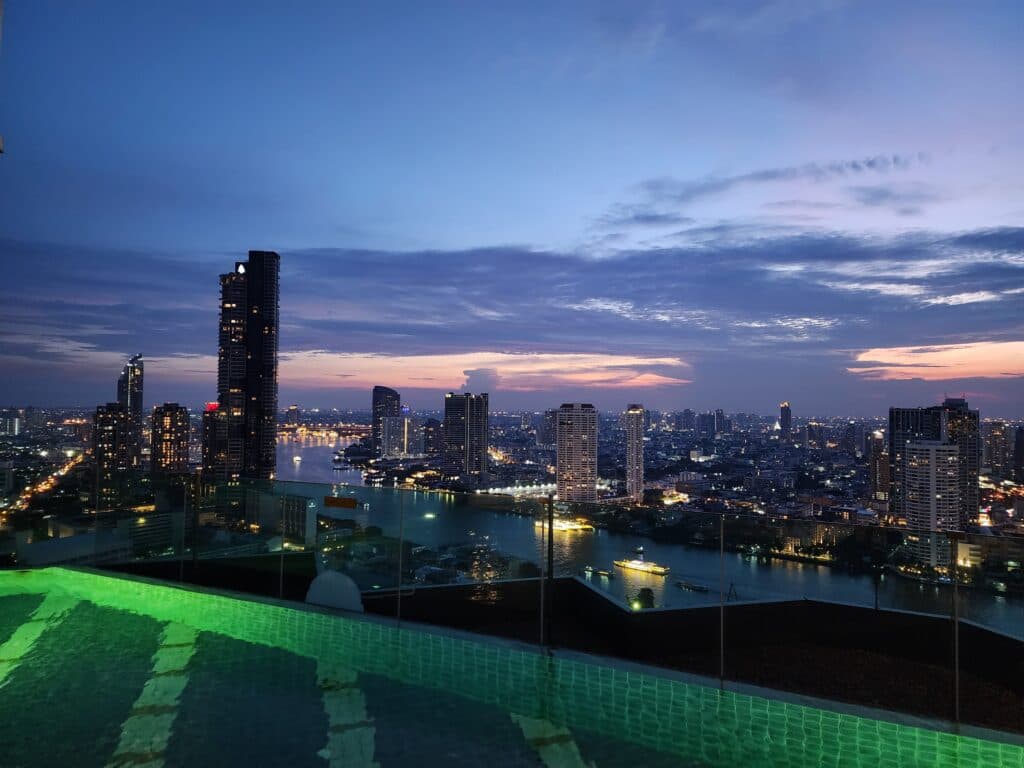
These are far from the cheapest hotels you can find in Bangkok -- in fact most of Bangkok's most expensive hotels are located in this area. But if you are seeking a memorable experience this is where you'll find it.
If I was visiting Bangkok for the first time again, as a tourist and money was no object -- I would hard pressed to choose between the Chao Phraya Four Seasons, the Peninsula or the Shangri-La. For me, these three hotels symbolize the best of Bangkok and the best of Thailand's heritage and culture. If I wanted the best value for money, with a similar cultured hotel experience in the Sathorn Area, I would choose the Arun Residence, where rooms can cost $100 or less.
A hostel is cheaper than a hotel -- because you'll share the room with others. There are not manyhostelsin Sathorn, at least not any places I would consider recommending in this guide. Stick to the Old Town, Samsen Road or Khao San Road if you prefer to stay in hostels in Bangkok. There is one hostel I would recommend, although it's not technically in Sathorn -- it's just a few minutes away -- in Silom.
Other Names:Lower Sukhumvit, Nana, Asok, Thong Lor, Huai Khwang, Watthana, Bangkok CBD.
Sukhumvit can be a greatplace to stay in Bangkok; but I don't recommend staying here on your first visit. It's too far from the popular sightseeing areas and there is not much for tourists to do in Sukhumvit. However, if you've already done the 'touristy things', seen the temples -- taken a cruise on the river -- eaten the street food in China Town -- etc, etc. Then Sukhumvit can be a great choice.
The area is more suited for those staying or living long-term in Bangkok with a big focus around dining and nightlife -- it's also where two of Bangkok's mostinfamousred light districts are located.
Good to Know:Soi is a transliteration of the Thai word 'ซอย'. It's pronounced the same as it's spelt, Soy -- like the sauce -- and it can mean street, road, or alley. The word is often used for small roads as opposed to highways or main roads.
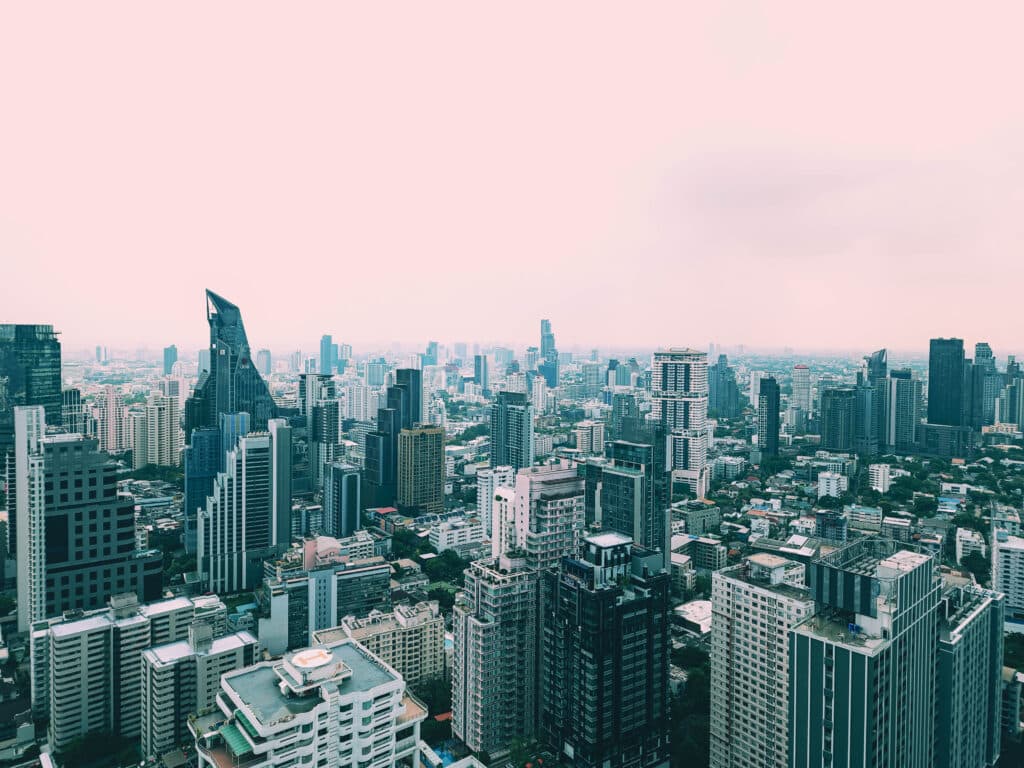
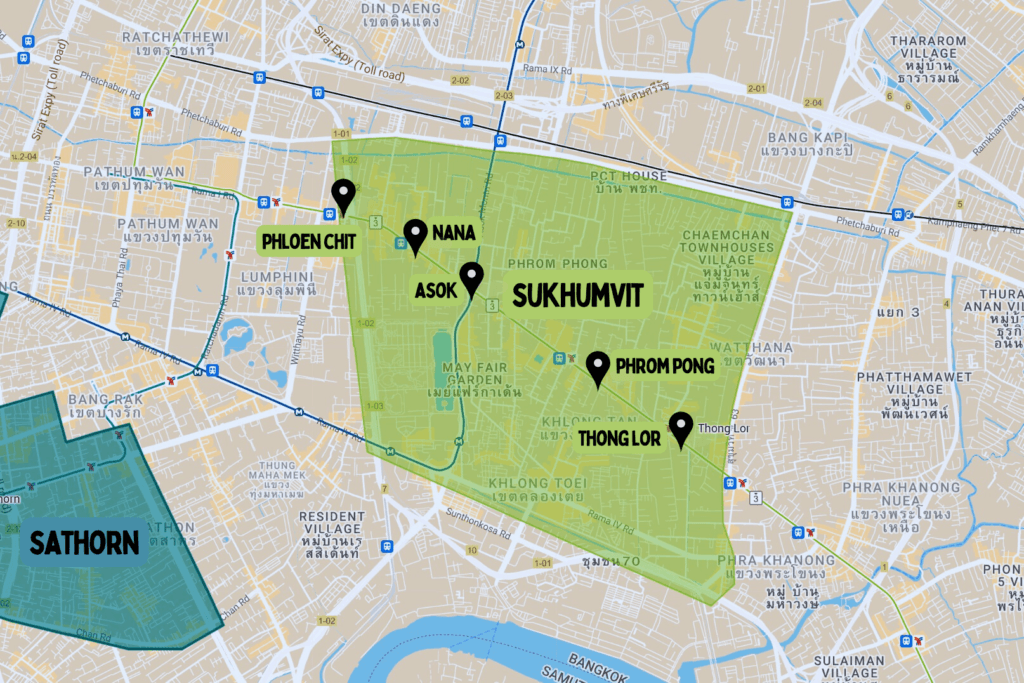
There are often disagreements as to what actually constitutes as 'Sukhumvit' --- becauseSukhumvit is not an official district of Bangkok -- it's a nickname. This is something that really confused me, to begin with, but it actually makes perfect sense. The area takes its name from Sukhumvit Road.A near 500-kilometer road which runs through the centre of the 'Sukhumvit Area' -- beginning in Phloen Chit, Bangkok, and stretching all the way into Cambodia!
If you were to follow the road east, you would leave Bangkok, and enter the Province of Samut Prakan -- somewhere around The Bang Na area, before passing through the beach town of Pattaya and eventually arriving at the Phnom Penh Thai/Cambodian Border.
Navigating the Sukhumvit Area of Bangkok is really easy, once you understand how the streets are laid out. Sukhumvit Road runs through the middle, with streets branching off on either side. The streets are all named Soi Sukhumvit -- followed by a number. For example, Soi Sukhumvit 1 is located in Pelion Chit and is the first street in the Sukhumvit area. Streets are named in numerical order with odd-numbered streets branching off on the north side of Sukhumvit Road, and even-numbered streets branching off on the southern side of Sukhumvit Road. The BTS Sukhumvit Line is a train line that runs along the centre of Sukhumvit Road, elevated on a platform above the road.
For the purpose of this guide -- I will define Sukhumvit as the area between Sukhumvit Soi 1 -- until Sukhumvit Soi 60, which is located further east -- in Thong Lor. This area is often referred to as 'Lower Sukhumvit' -- because the streets have the lowest numbers. I will use the Saen Saeb Canal to mark the northern boundary of the Sukhumvit Area -- and Rama 4 Road to mark the southern boundary. (There is a boat route along the cancel between lower Sukhumvit and Bangkok's Old Town).
Contained within this area of Lower Sukhumvit -- there are five mainneighbourhoods. From west to east, these are:Phloen Chit,Nana,Asok, Phrom Pong, andThong Lor. Each of these neighbourhoods are locatedaroundone kilometre from each other. There are plenty of accommodation options in each of these areas -- although the hotels around these areas are usually more 'modern' -- they are often smaller rooms, which don't have that traditional Thai Charm you might expect to find in Bangkok.
I will explain the pros and cons of each neighbourhood in the Sukhumvit area, including some recommendations for the best hotels -- at all price ranges. The Lower Sukhumvit Areas are all somewhat similar to one another -- but each has their own quirks and differences.
Note:I have not included manyhostelrecommendations for the Sukhumvit Area, because there are not many I would recommend. The best hostels in Bangkok are in the Old Town. In Sukhumvit, the focus is more on private rooms, hotels and condo buildings.
Phloen Chit is one of thetamerplaces to stay in the Sukhumvit area. A good option for families to stay -- Peloen Chit is very central and close toSiam Square, where a lot of Bangkok's Shopping Malls, like Siam Paragon, and MBK are located -- it's also the location of international attractions like Madame Tussauds, and Sea Life Bangkok. The Erewan Shire is located too.
Sukhumvit Road -- Including Alleys Numbered - Sukhumvit Soi 1, to Sukhumvit Soi 7
Hotels in Phloen Chit arenotgreat value for money -- unless you are in Bangkok to go shopping, you can find nicer hotels in the same price range in the Sathorn area, or the Phrom Pong/Thong Lor areas of Sukhumvit.
Sukhumvit Road -- Including Sukhumvit Soi 11, to Sukhumvit Soi 31
Nana and Asok. These are two of the most popular, and affordableplaces to stay in Bangkok-- especially Asok. Asok has fantastic connections to the rest of Bangkok because there is an underground MRT Train Station, and BTS Skytrain Station too -- it's a good central location to base yourself, where you can get around the city with ease.Terminal 21 Shopping Mallis located in Asok and has a popular food court on the top floor.
I've grouped Asok and Nana together because these two neighbourhoods are next to one another and share a lot of the same characteristics. These areas are the heart of Bangkok's infamous nightlife scene and home to two of the most well-known red-light districts --Soi Cowboyin Asok, andNana Plaza, in Nana. You can find some great hotel deals in these areas and there is plenty to do in the daytime and the nighttime.
The hotels you'll find in the Nana area of Sukhumvit, Bangkok are mostly so-so. As in -- they are not bad hotels, but they are nothing special -- they are generally mid-ranged, nice-enough box rooms. They're clean, modern and affordable. Although it's tough to find somewhere that stands out in this area -- and arguably, while there is nothing wrong with the hotels here -- they are not the best value for money.
Asok, (sometimes spelt Asoke), has a connecting MRT/BTS Train Station. This makes the area a more desirable place to stay because of how convenient it is to get around other parts of Bangkok from here -- this has also caused hotel costs to inflate.
The rooms and hotels in Asok are pretty basic and nonereallystand out -- unless you go five-star -- but if you're spending 5-star hotel money, you're better off in the Sathorn District. A lot of hotel rooms in Asok do not have a window -- make sure to consider this when looking at hotels in Asok.
Sukhumvit Road -- Including Sukhumvit Soi 33, to Sukhumvit Soi 61
Prom Pong and Thong Lor are also located next to one another in the Sukhumvit area of Bangkok -- and they share a lot of similarities. They are the 'trendiest' areas in Bangkok -- and both spots would be considered upmarket. So because of the similarities, I have decided to group these two neighbourhoods into one section.
In my opinion -- Phrom Pong or Thong Lor are the best places you can pick to stay in,once you've decided to stay in Sukhumvit. The areas are the home of upscale entertainment, and fine dining at affordable prices. You're not in the thick of the red-light districts, although you're not too far away -- and the area is upbeat, trendy and relaxed. There are plenty of breakfast cafes and coffee shops -- outdoor and indoor dining options -- restaurants and bars, nightclubs, comedy clubs, cannabis clubs, cocktail bars, rooftop terraces, and karaoke joints -- some of Bangkok's best nightlife is in this area. Locals will come to this area instead of Khaosan Road.
You'll be spoiled for choice in this area -- for dining and drinking -- there are even a handful of Michelin Star Restaurants too. There is a lot to explore, but the one recommendation I'll give in this guide is the Cocktail Bar on the Tichuca Rooftop -- it's affordable, has great views and a great vibe.
The downside of staying in Prom Pong or Thong Lor, is how far they are located from the rest of Central Bangkok. There is a BTS Trainline here, but it takes around 20-30 minutes to ride to the Central Station.
Sukhumvit Road -- Including Sukhumvit Soi 63, to Sukhumvit Soi 91
Ekkamai, Phra-Khanong, and On Nut are three popular locations at the far-eastern-end of the Sukhumvit Area. This is (debatably) where Lower Sukhumvit becomes Upper Sukhumvit. These areas can be very nice for expats looking for affordable housing and a quiet, authentic lifestyle -- in fact, I spent almost a year living in this area of Sukhumvit, and there are not many tourists around at all.
But there is a good reason for that -- it's inconvenient and there is **** all for tourists to do around here -- the journey from this area to the Old Town Bangkok Temples can take over an hour using multiple transport methods.
Bangkok is one of the few places whereyou don't need to get off the tourist trail. I strongly encourage you to consider alternative areas to stay in Bangkok, if you are here on a short trip. If you really want somewhere cheap, and quiet it's best to get out of the city completely. Find an island instead, I would suggest Koh Lanta or Koh Jum. You'll find low-cost beach bungalows, peace and quiet and you'll also have a beach to hang-out at.
If you ask around in any of the Bangkok forums, or the Facebook Groups -- forthe best areas to stay in Bangkok-- after you've had your ear chewed off -- you'll often be recommended some nice, quiet spots around the city, which are perfect for expats and long-term stays. But as a tourist, you would have totally different requirements -- and most of the quieter areas are just too far from the heart of the action.
Bangkok is a well established city with millions of visitors annually. Bangkok is one of the only places whereyou don't wantto get off the beaten track -- you don't need to try and do what the locals do. Get stuck in with other tourists, travellers and likeminded people and you'll get the most out of the city.
In Bangkok -- try to find the busiest, most popular areas. This is the total opposite advice that I'd give for anywhere else. But in Bangkok, there is good reason why some areas are busier than others -- sometimes, following the crowds is the best thing you can do, not the worst.
These places are all listed, not because they are bad places to stay. But because they are bad areas for tourists to stay. Most of them are far from the centre and lack anything for tourists to actually do.
But despite that, I've seen them all recommended in other 'Where to stay in Bangkok' Guides. Granted, some of these areas can be cheaper, and quieter -- but that's not what Bangkok is about.
What's the point of saving money if you never get to see the main tourist attractions of Bangkok. If you're staying long-term in Bangkok -- definitely check out some of these areas -- especially Ari and the Upper Sukhumvit Areas. But as a tourist (or traveller) you'll have a lot more fun by getting stuck into the thick of Bangkok, in the Old Town, or relaxing by the Riverside in Sathorn.
Bangkok has different types of accommodation to suit different requirments, and different budgets. The different accommodation types in Bangkok can be broken down into four main categories;Hostels, Private Rooms, Hotels, and Condos (apartments).
I should touch on the topic of Airbnb's in Thailand -- It wouldn't be a complete where to stay in Bangkok guide, otherwise.
You might have heard that Airbnb is illegal in Thailand -- and although there is some truth in this statement -- there is not an outright ban on Airbnb -- it's a bit of a controversial topic. And as someone who owns one of these Condos, it's a topic I'm actively invested in -- Airbnb can inflate costs making it unafordable for local people -- so therefore I haven't listedmanyrecommendations for condo buildings in this guide --aside from the few that have basically become hotels already.
As is the case with a lot of things in Thailand, there isn't a clear -- black-and-white answer.Thereisa lot of grey. Techinally short-term rentals are illegal -- in some (but not all) situations. Most peoplehave no problems -- but it's important to know these rules exist nonetheless.
Although it is a complex topic -- I'll try and summarise the basics of Airbnb laws and rules in Thailand.
Renting a condo short term in Bangkok is great -- there are some beautiful sleek and modern buildings around -- especially in the Sathorn Area -- with amazing river views. Airbnb offers a totally different experience than hotels. The condo owner will usually be your only point of contact -- and you'll be left to your own devices -- you'll have access to all the building amenities, which usually includes a Swimming Pool, Sauna, and Fitness Room -- often located on the rooftop -- and often nicer than some hotels. And the nightly rate is significantly less than a hotel.
Sounds Good? Well, you should know that renting an Airbnb in Bangkok istechnicallyillegal -- but only if you are a foreigner, and you are renting for less than 30-days -- but don't worry too much, this rule is rarely enforced (without reason). And in a worst-case scenario, all fault lies with the host -- not the guest.
The thing that makes Airbnb 'illegal' is the fact that all hotels in Thailand are required to upload a record of their guest's passport details onto Thailand's Immigration System(TM30) -- so that Immigration officers, can see at a glance where foreigners are staying -- at all times.
It's a technicality -- because condo units cannot register as a hotel and therefore cannot have access to Thailand's Immigration Systems to register guests -- this is the only reason that makes Airbnb 'illegal'. As a guest -- you won't have broken any laws -- it is the responsibility of the host to ensure guests are registered with Immigration.If you have Thai citizenship there is no immigration requirement and Airbnb is totally legal.
These rules don't apply to stays that are longer than 30 days -- because in these situations foreigners can self-report their address to immigration, making it legal.
Even if Airbnb was 100% legal in Thailand -- there are still rules set out by the building owners, which often prohibit renting rooms on a short-term basis. So if you do decide to rent short-term through Airbnb in Bangkok keep in mind that regular working-class people; own, and live in these same buildings permanently. Residents do get frustrated with short-term tourists overtaking shared facilities, drinking and playing loud music -- or overtaking the pool for an Instagram Photo Shoot.
But -- providing you are respectful, choosing to stay in a condo in Bangkok, can be a rewarding experience and a great way to enjoy a luxury experience, at a fraction of the cost of a hotel. If you act like you belong, you should be just fine and you can enjoy a luxury experience at a fraction of the cost.
TL;DR (Too Long, Didn't Read) -- There is an abundance of places to stay in Bangkok. The city is known for having some of the cheapest five-star hotels, in the world -- but you can find accommodations to suit literally any budget -- seriously, you can find rooms for as little as a few dollars a night, and you can find rooms that cost a few thousand dollars a night -- often these places can be located next to each other, sometimes -- even on the same street!
But the most important thing to consider when looking for a place to stay in Bangkok is the location, (location, location). If you're staying near a BTS Train Station, MRT Station, or Chao Phraya Boat Station -- it will make it much easier to get around the city. And if you're staying in one of the three areas I recommend in this guide -- Sathorn, The Old Town or Sukhumvit you can relax in the knowledge you've picked a good area to stay in.
Don't listen to recommendations from expats when you are choosing somewhere to stay in Bangkok, more often than not -- the needs of a traveller will be overlooked and people will recommend quieter areas of the city, which are great for long-term stays, but terrible for tourists. Bangkok is one place where you don't need to try and get off the tourist trail. Stay in the busiest areas -- embrace the nightlife -- visit the Temples -- and enjoy falling in love with this vibrant city. ✌
Robb, who finds it a little unusual to write about himself in the third person, has been living in Southeast Asia for over 10 years. He works online and is based in Bangkok, Thailand. During this time, he has had the chance to travel extensively throughout this beautiful region.








.jpg&w=640&q=75)
Leave a Comment