Are You Supposed to Tip in Thailand? A Practical Guide for Travelers
Published May 25, 2020
Updated February 9, 2026
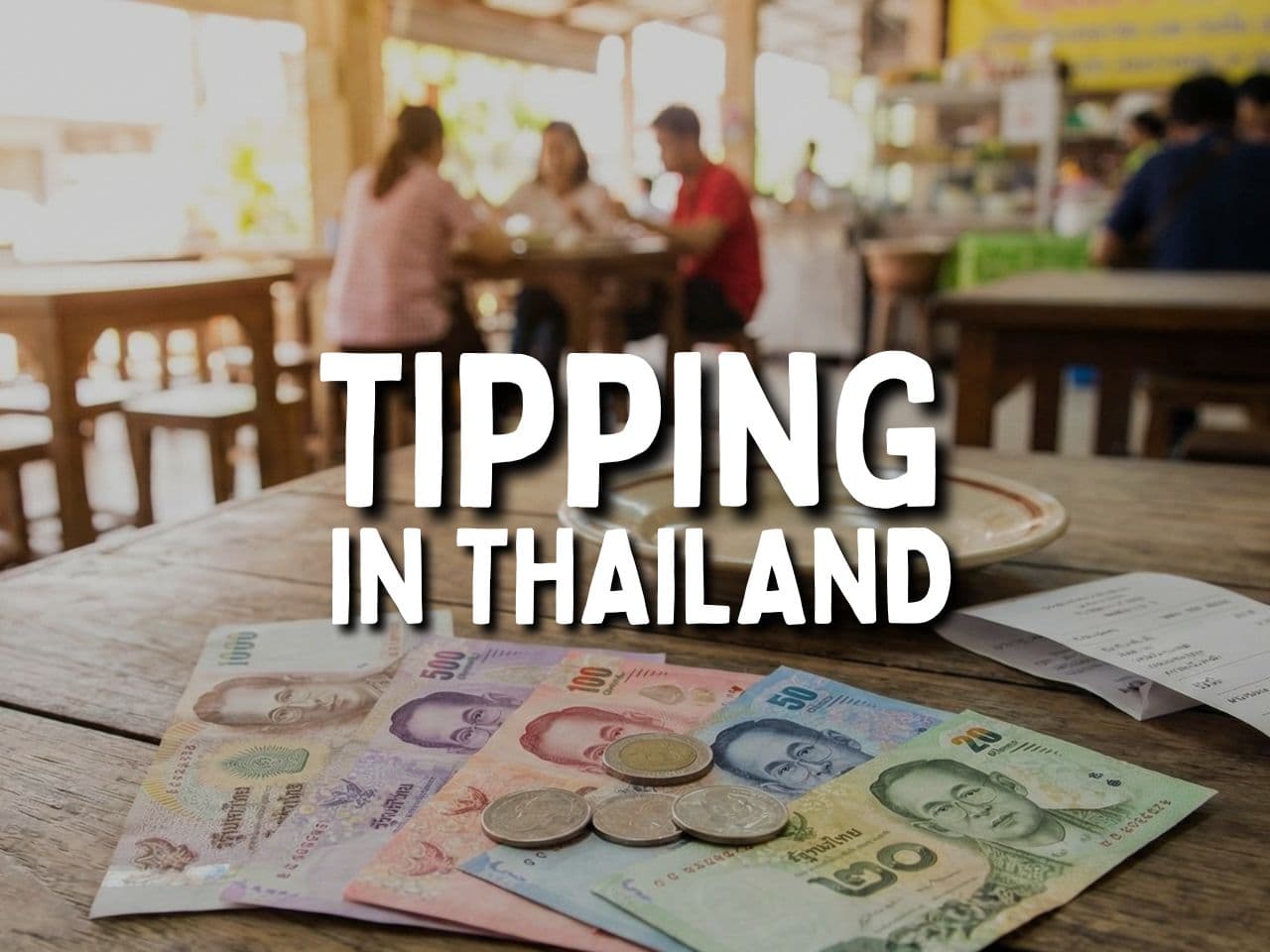
Wherever you turn, you’ll find conflicting information. Depending on who you talk to, or what you read, you’ll probably be told to either tip a small amount or avoid tipping altogether.
If you've traveled in Thailand, you’ve likely noticed tip boxes everywhere. They are strapped to the backs of seats in taxis and boats, sitting on the counter in Burger King, or perched on hotel reception desks and pharmacy counters. While they are a constant fixture, they are rarely used! Thai people are optimistic in this approach, but these boxes prove one thing: like it or not, tipping is indeed part of Thai culture.
It is important to understand that tipping culture in Thailand is different from the United States. Tips here are never required; they are always optional, and tips are not percentage based. In some situations, a tip might be socially expected, but it always remains an optional choice which can be substituted with a smile.
If you just want a simple reference without overthinking it, this quick guide covers most common situations:
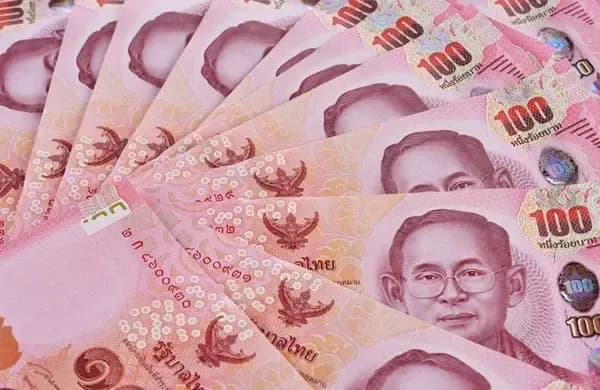
In order to provide some context. I’m trying to think of occasions I have tipped in Thailand recently, and how much. Tour Guides are a good example—I booked a tour of the Khao Yai National Park on a Private Basis, had an amazing day, and tipped 1000 Baht to the Tour Guide. I was fishing at a lake in Phang-Nga and had a local helping me. I tipped him 1000 Baht after staying there fishing for two days. I gave my mechanic a 1000 Baht too after helping resolve an issue with my car for me. Ok, looking at my record, maybe 1000 Baht is the right amount to tip for 1-to-1 experiences. Oh, taxi drivers as well; when I’m in Bangkok, good drivers are so hard to find, that when I get a driver who doesn’t cause problems, I always add an extra hundred baht or so onto the fare to show my appreciation. Or maybe 20 - 30 Baht to a Grab delivery driver.
So yeah, it’s not overly common to tip in Thailand day-to-day, but it’s certainly not seen as rude. It depends on what service is being offered. And when you’re on vacation you’ll naturally be engaging more in industries, areas & activities where tipping is more common and apparent!
I very rarely tip in restaurants or when eating out in Thailand, and Thai people typically would not tip either; I think this is where the tipping confusion comes from in Thailand. Since it’s not common to tip at restaurants, people automatically assume this applies to all aspects of life, which simply isn’t true.
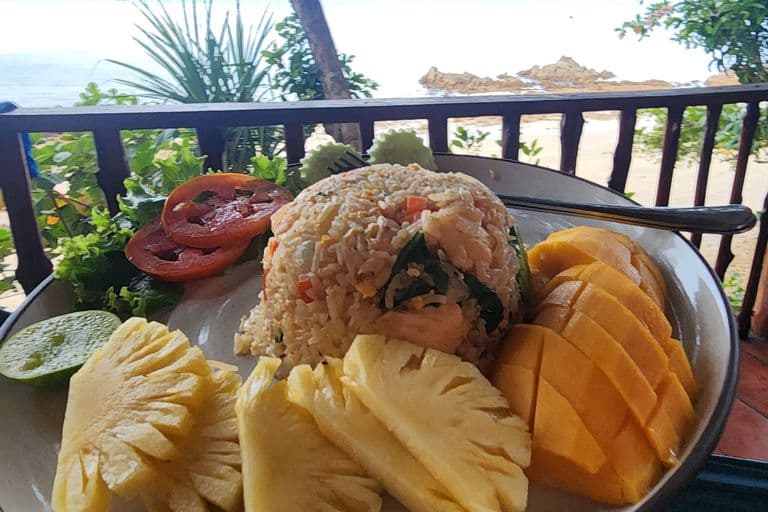
Now, the reason it’s uncommon to tip at restaurants in Thailand is because the country has a unique relationship with food, you can find a quality meal at affordable prices everywhere you turn. Many Thai people eat more meals out, than they cook at home, it's convenient and tasty. Since eating out in Thailand is part of day to day life, it would be insane to tip every time you wanted a bite to eat.
But, if you did decide to tip at a restaurant, rounding the bill to the nearest hundred baht is appreciated and certainly not seen as rude. This is one area where it’s OK to leave smaller amounts should you choose to.
But just because tipping while eating out in Thailand is not common, this does not mean that tipping in other areas is not expected. In the hospitality industry, tipping in Thailand is quite normal. For both Thai Domestic Tourists and International Tourists. I think this is understood, but figuring out how much to tip is often the sticking point.
You don’t want to be overly generous, but you also don’t want to insult someone either. Tipping in Thailand really comes down to the context of the service.
As some of you might know, I run a tourism business here in Thailand. So I know first hand how much my employees receive in tips from our domestic and international customers, and the amounts they receive vary drastically. To give you an idea of the confusion: the largest tip one of my team members ever received was 20,000 Baht. The lowest tip for that exact same tour? Just 15 Baht in loose coins.
This highlights the confusion visitors deal with trying to understand the tipping etiquette in Thailand. Interestingly, both extremes caused discomfort. Receiving loose change feels insulting. Even if the guest didn't mean it that way—honestly, it is often better to tip with a smile in those instances when you’re unsure. On the other end of the scale, a 20,000 THB tip feels overwhelming and un-deserved.
There’s also a common misconception among some travelers that Thai people can live on very little, or that even a few baht goes a long way. While it’s true that wages in Thailand are generally lower than in Western countries, the cost of living isn’t that low. A 20 baht tip isn't quite the "thank you" you might think it is. Think about it, what could you actually buy in Thailand for 20 Baht. A bottle of water in the 7-11 maybe? But that’s about it.
So to summarise, tipping in Thailand really depends on what you’re doing and who you’re dealing with. Unlike some countries, tips here aren’t based on percentages. Tipping in Thailand isn’t about obligation — it’s about appreciation, context, and human connection.
When you’re dealing with service workers, tipping is never rude and is genuinely appreciated. That said, it’s important to remember that tipping is always optional. There’s no single rule that fits every situation, so trust your judgment and do what feels right, and if you’re unsure, tipping with a smile is always perfectly acceptable.
My recommendations are by no means a hard rule, and you should always use your own discretion.
Is 40 Baht a Good Tip? Is 100 Baht a Good Tip, is 1,000 Baht a good tip? In the words of the local people, “up to you, na ka.”
It’s impossible to set one rule because it depends on the service. 40 Baht might be a nice gesture at a local restaurant, but it’s quite low for a tour guide. Whereas 1,000 baht would be seen as a good tip for a tour guide, but way too much for a restaurant.
Let’s dive deeper into which industries tipping is common, and how much is seen as a fair, reasonable, and appreciative amount.
A standard Thai massage usually costs around 500 Baht, and that amount is typically split equally between the shop owner and the masseuse. A tip of 100 to 200 Baht is considered generous and is always appreciated. Make sure to hand the tip directly to your masseuse rather than leaving it at the front desk when you pay the bill. Keep in mind that specialized treatments like oil massages, aromatherapy, or hot stone massages will cost more, but the same tipping etiquette applies.
Tour guides in Thailand often have enormous personalities and can turn a simple outing into a truly special experience. If you are taking a private tour, it is generally socially expected to leave a tip for your guide or host. Tipping here isn’t necessarily based on a percentage of the tour price, but rather on the quality of the experience and the effort the guide puts into tailoring the day for you. For private boat tours, 1,000 THB is considered a fair tip, which the guide will often share with the drivers, captains, and other crew members involved.
It is common practice to tip when joining a group tour, such as a shared speedboat excursion. Tips on these shared boats are often pooled from all participants. Usually, a contribution of around 100 Baht per person is given, which then gets split among the entire crew at the end of the trip.
Tipping is not expected at street stalls and will often cause confusion if you try to do it. It is much easier to simply not tip street vendors. Instead, just show your appreciation by enjoying the authentic flavors and the incredibly affordable prices.
Tipping in local restaurants is not common in Thailand, but if you want to leave a little extra in a smaller establishment, remember that it isn't based on a percentage of your bill. Since local Thai meals are inexpensive—often under 500 Baht for two people—it is perfectly acceptable to round the bill up to the nearest 100 Baht or add an extra 100 as a tip. This is entirely optional and not expected. If you do decide to tip, hand it directly to your server so they don't try to return it to you as change.
In most high-end restaurants, you will find that a service charge has already been applied to your bill. While Thailand is generally a budget-friendly destination, cities like Bangkok and Phuket offer luxury shopping malls and fine dining where prices can easily exceed Western standards. A meal at a rooftop spot like Vertigo and Moon Bar can cost 10,000 Baht or more. Always check your bill first, as almost all high-end venues include a 10% service charge, meaning there is no need to tip further unless you received exceptional service.
You aren't expected to tip when buying a coffee, though most shops will have a tip box on the counter. If you want to leave a small amount, such as 20 to 40 Baht, these tips are usually collected and shared among all the employees at the end of the shift.
If you have hired a driver for the day to take you between tourist spots and they are acting as a pseudo-guide, you should tip them similarly to a tour guide. However, if a driver is simply getting you from point A to point B for a fixed fare, there is no need to tip. The only real exception is when using a taxi meter, which is mostly a Bangkok phenomenon. I usually tip meter taxi drivers around 100 Baht if they use the meter fairly and don't attempt any of the common tourist scams.
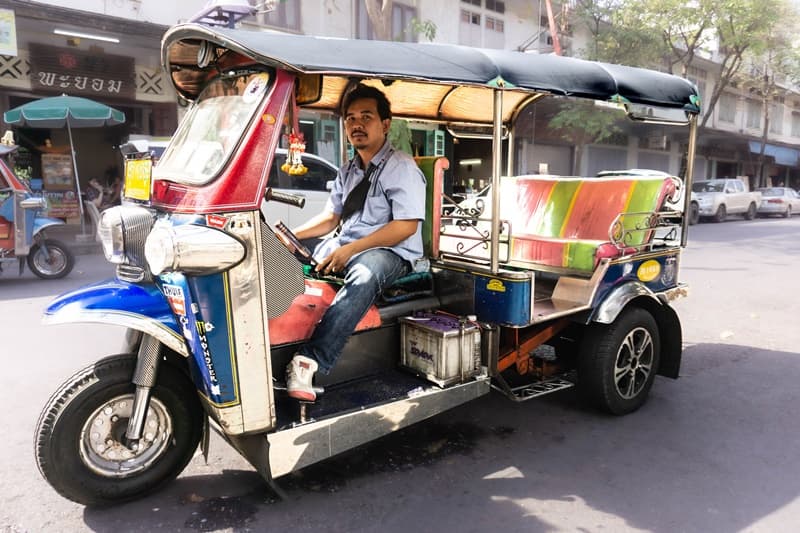
Because Tuk Tuks are usually negotiated upfront and often cost more than metered taxis, tipping is not expected. The agreed price already reflects the service, and additional tips are uncommon.
In my opinion, one ride in a Tuk-Tuk is enough just to check it off your bucket list. They are often overpriced, cramped, and uncomfortable compared to a regular taxi. Because they are prone to scams and usually cost more than a metered car, they aren't a practical way to get around. By all means, take one for the experience, but once is usually plenty.
This depends entirely on where you are staying. If you are backpacking, you won't need to worry about tipping hotel staff at all. In higher-end resorts, however, tipping is more common. Even if you travel light with a single backpack like I do, it can feel a bit awkward when a bellhop offers to carry your bag, but it is a nice gesture that warrants a 50 to 100 Baht tip.
Just as you might tip your barber at home, Thailand is no different. Barbershops are one of the few places where a tip is generally expected. If a shop is charging under 100 Baht for a basic cut, tipping isn't required. However, for shops charging between 100 and 350 Baht for a custom service, a standard tip of around 50 Baht is the norm.
Food delivery has become incredibly popular in cities like Bangkok, Phuket, and Chiang Mai. While tipping isn't mandatory, leaving an extra 20 to 40 Baht is a great way to show appreciation to the riders. You can usually do this directly through the app or by handing them cash upon arrival.
Robb, who finds it a little unusual to write about himself in the third person, has been living in Southeast Asia for over 10 years. He works online and is based in Bangkok, Thailand. During this time, he has had the chance to travel extensively throughout this beautiful region.








Leave a Comment